

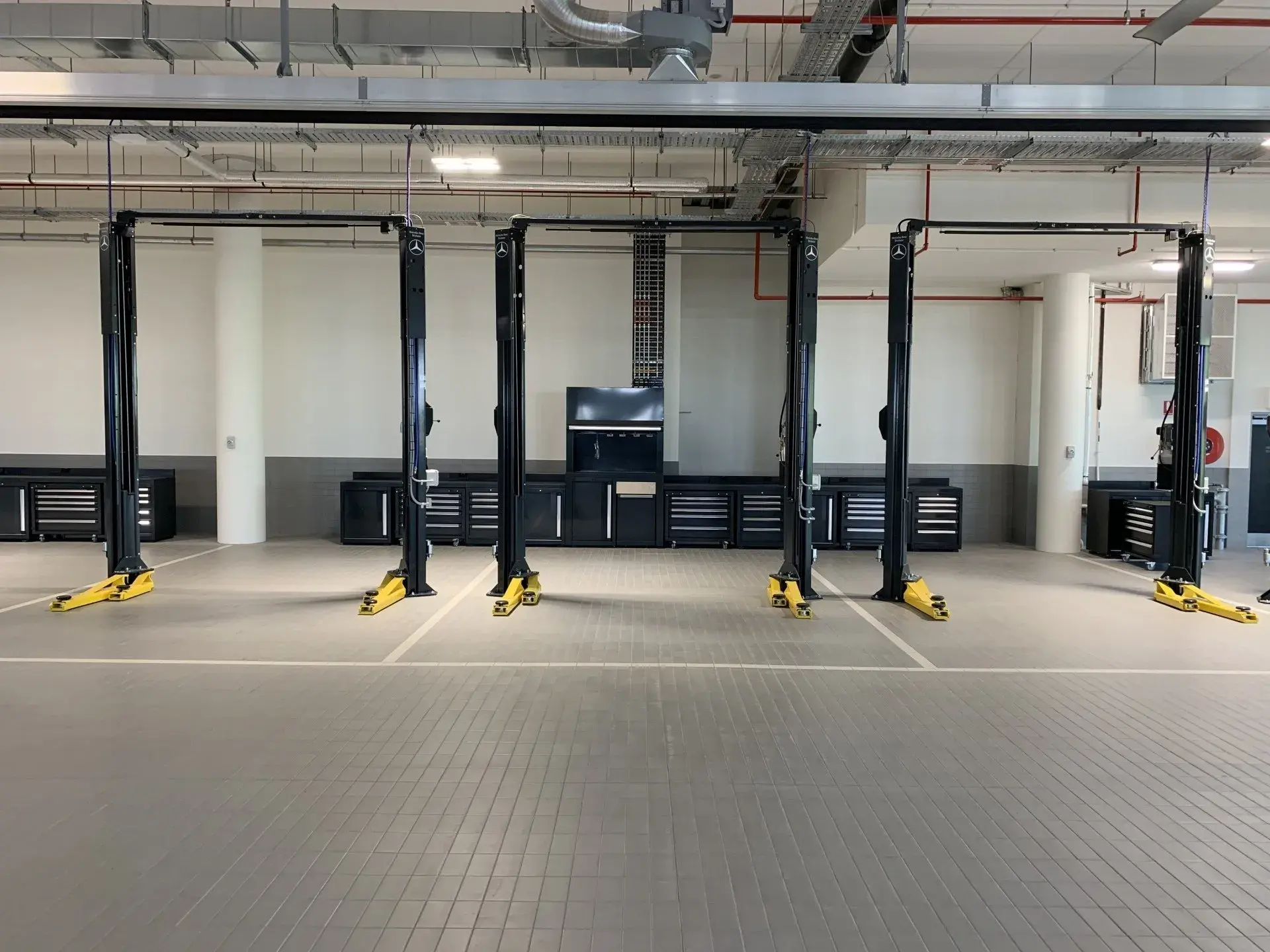
A vehicle hoist is a core piece of equipment in any automotive workshop. It lifts vehicles safely off the ground, giving technicians full access to the underside for servicing, inspections, and repairs.
In modern workshops, hoists play a critical role in safety, access, and productivity. The right hoist reduces physical strain, improves working access, and helps technicians complete work faster and more consistently.
At HDR Workshop Solutions, we help dealerships and service centres select, install, and service vehicle hoists as part of a broader workshop design. Our focus isn’t just on installation. We ensure hoists are positioned and integrated to support efficient workflows and long-term workshop performance.
What is a Vehicle Hoist?
A vehicle hoist is a mechanical lifting device designed to raise vehicles off the ground, allowing safe access to the underside for servicing, inspections, and repair work. They’re a critical component of mechanical workshops and can be a notable part of organising a workshop too.
How Have Vehicle Hoists Evolved?
Early workshops relied on pits, jacks, and axle stands to work underneath vehicles. While effective at the time, these methods were slower and carried higher safety risks. In comparison, hydraulic and electric hoists provide greater stability, lifting capacity, and built-in safety features. They’re designed to handle heavier vehicles and support faster, safer workshop operations.
Benefits of Vehicle Hoists
Safety
Vehicle hoists reduce the need for manual lifting and awkward working positions. By raising the vehicle to a safe, comfortable height, technicians can work more ergonomically, which helps lower the risk of strain, fatigue, and long-term injury. Modern hoists also include built-in safety mechanisms that improve stability and reduce workplace risk. While vehicle hoists can increase safety in workshops, it’s important to follow and adhere to the safety steps of using vehicle hoists.
Accessibility
Hoists provide clear, unobstructed access to the underside of the vehicle. This makes tasks such as inspections, diagnostics, brake work, suspension repairs, and exhaust servicing faster and more accurate. Better access also helps technicians identify issues earlier and complete work to a higher standard.
Productivity
With quicker setup and improved access, technicians spend less time positioning vehicles and more time completing work. Hoists support smoother workflows, reduce delays between jobs, and help maintain consistent turnaround times, especially in busy service environments.
The Different Types of Vehicle Hoists
Different workshops require different hoist solutions. The right choice depends on vehicle types, available space, servicing volume, and how the workshop operates day to day.
Common Types of Vehicle Hoists
Two-Post Hoists
Two-post hoists are one of the most common options in automotive workshops. They lift vehicles by the chassis, leaving the wheels free and providing excellent access to underbody components.
They’re well-suited to general servicing, mechanical repairs, and diagnostic work. When positioned correctly, two-post hoists support efficient workflows and quick vehicle turnaround. Correct installation and slab suitability are critical to ensure safety and long-term reliability.
Four-Post Hoists
Four-post hoists support the vehicle by the wheels, offering high stability and load capacity. They’re commonly used for heavier vehicles, wheel alignments, and longer-term servicing tasks.
These hoists require more floor space but offer flexibility for specific applications. In workshops servicing a mix of vehicle sizes, four-post hoists often complement two-post setups.
Scissor Hoists and Low-Profile Hoists
Scissor hoists and low-profile hoists are often used where space is limited or where fast access is required. They’re commonly found in express service bays and tyre or brake service areas.
While they don’t always provide the same level of underbody access as post hoists, they support quick, repeatable tasks and help maintain high throughput in busy workshops.
Choosing the Right Hoist Type
Choosing the right vehicle hoist isn’t just about lifting capacity. It requires an understanding of how vehicles move through the workshop, the type of work being performed, and how technicians use the space.
At HDR Workshop Solutions, we assess hoist selection and placement as part of the overall workshop design. This ensures each hoist supports workflow, safety, and productivity rather than creating new constraints. If you’re researching hoists for your workshop, please feel free to contact our friendly team for advice or more personalised information.
How Vehicle Hoists Are Used in Day-to-Day Workshop Operations
Routine Servicing and Maintenance
Hoists are used daily for routine servicing tasks such as oil changes, brake inspections, suspension checks, and fluid replacements. By lifting the vehicle to a comfortable working height, technicians can move quickly between tasks without repositioning equipment or vehicles.
This consistency supports faster servicing and helps maintain predictable turnaround times.
Inspections and Diagnostics
Clear underbody access is essential for accurate inspections and diagnostics. Hoists allow technicians to visually inspect components such as exhaust systems, driveline parts, bushings, and mounts with minimal obstruction.
Better visibility reduces missed issues and supports more accurate fault identification.
Repairs and Component Replacement
Many mechanical repairs require full access underneath the vehicle. Hoists make tasks like exhaust replacement, suspension work, and transmission servicing safer and more efficient.
With stable lifting and proper positioning, technicians can work with greater precision and less physical strain.
Express and High-Volume Servicing
In high-volume and express service environments, hoists play a key role in maintaining flow. Quick-lift solutions allow vehicles to move in and out of bays efficiently, supporting repeatable, fast-turnaround tasks.
Correct hoist selection and placement are critical in these settings to avoid bottlenecks and delays.
Why Professional Hoist Installation Matters
A vehicle hoist is only as effective as its installation. Poor positioning, incorrect anchoring, or unsuitable slab conditions can compromise safety, workflow, and long-term reliability.
Professional installation ensures the hoist is:
- Positioned to support efficient vehicle movement
- Installed to suit slab strength and structural requirements
- Integrated with power, air, and other workshop services
- Compliant with safety standards, Australian Standards and manufacturer requirements
At HDR Workshop Solutions, we install and service hoists as part of a broader workshop system. We consider how each hoist interacts with surrounding bays, technician movement, and future growth. This approach helps protect performance and reduces the risk of costly rework later.
Hoist Servicing and Maintenance
Like any critical workshop equipment, vehicle hoists require regular servicing to remain safe, reliable, and compliant. Hoists operate under heavy loads and constant use, making routine inspection essential.
Why Regular Servicing Matters
Regular servicing helps identify wear, alignment issues, and component fatigue before they become safety risks or cause downtime. A poorly maintained hoist can disrupt workflow, delay jobs, and expose staff to unnecessary risk.
Scheduled servicing also helps extend the life of the hoist and protect the original investment.
What Hoist Maintenance Involves
Hoist servicing typically includes:
- Inspection of mechanical and hydraulic components
- Checking anchors, arms, locks, and safety systems
- Lubrication of moving parts
- Load testing where required
These checks help ensure the hoist continues to operate as intended under daily workshop conditions.
Common Vehicle Hoist Mistakes and How to Avoid Them
Many hoist issues don’t come from the equipment itself, but from decisions made during selection, installation, or layout planning.
Common mistakes include:
- Installing hoists without considering vehicle flow
- Inadequate slab strength or incorrect anchoring
- Poor spacing between bays
- Choosing hoists that don’t suit the vehicles being serviced
Avoiding these issues starts with early planning and specialist input. Selecting the right hoist and positioning it correctly from the outset helps prevent costly changes later.
Choosing the Right Hoist for Your Workshop
Whether this is your first vehicle hoist or you think your vehicle hoist is aged and in need of a replacement, it’s worth the time and due diligence in research. The right hoist depends on more than lifting capacity. Workshops need to consider:
- Vehicle types and weights
- Nature of servicing and repair work
- Available space and ceiling height
- Daily throughput and future growth
Matching the hoist to how the workshop actually operates is key to long-term performance. At HDR Workshop Solutions, we assess hoist requirements as part of the overall workshop design, ensuring each hoist supports efficiency rather than limiting it.
Considering Vehicle Hoist Installation or Workshop Design?
Vehicle hoists sit at the centre of how a workshop operates. When they’re chosen, installed, and maintained correctly, they support safer working conditions, faster turnaround times, and more consistent productivity. When they’re treated as a standalone purchase or installed without proper planning, they often become a constraint rather than an asset.
The difference comes down to early decisions. Hoist selection, placement, and integration need to reflect how vehicles move through the workshop, how technicians work day to day, and how the business plans to grow. Getting this right upfront reduces rework, limits downtime, and protects long-term performance.
At HDR Workshop Solutions, we work with dealerships and service centres to deliver hoist solutions that fit the workshop, not just the space. From selection and vehicle hoist installation through to servicing and integration within the wider workshop layout, our focus is on helping workshops operate more safely and efficiently from day one.
Get in touch with HDR Workshop Solutions to discuss hoist installation, servicing, or workshop design support and ensure your next project is built for performance, not compromise.